





Fielder Positions in Cricket – Complete Guide
Cricket is a lovely sport because it combines skill, approach, making plans, and teamwork. Batting and bowling are essential, but one part of the sport that often gets less interest is fielding. A strong and clever fielding arrangement can trade the fit completely. That is why information fielder positions in cricket may be very critical for players, coaches, and lovers.
This article offers you a complete guide to all fielding positions, their names, roles, importance, and nice makes use of, with simple English factors. We may even cowl field settings, diagrams, tables, and tips for novices so that you can recognize the whole lot sincerely.
Let’s begin knowledge cricket fielding like a professional.
What Are Fielder Positions in Cricket?
Fielder positions in cricket are the constant or strategic spots where fielders stand at the ground to forestall runs, take catches, or create pressure at the batsman. Every function has a particular purpose relying on:
- The bowler’s plan
- The batsman’s strengths
- Match layout (Test, ODI, T20)
- Pitch conditions
- Recreation scenario
A cricket team has 11 player, out of which 1 is the bowler and 1 is the wicketkeeper. The remaining nine fielders stand at extraordinary positions.
Why Are Fielding Positions Important?
Fielding positions assist the captain and bowler manipulate:
- Run scoring
- Limitations
- Catching probabilities
- Pressure at the striker
- Bowling strategy
Good discipline placement can win fits even when bowlers or batsmen are struggling.
Basic Understanding of the Cricket Ground
Two Important Sides of the Field
The ground is divided into aspects primarily based on the batsman:
1. Off Side
The off side is the part of the field in the front of the bat while held usually.
2. Leg Side (On Side)
The leg aspect is the alternative route of the off facet, in the back of the batsman when dealing with the bowler.
List of All Fielder Positions in Cricket
Below is the whole listing of trendy fielding positions used in cricket:
- Slip (1st, second, third)
- Gully
- Point
- Cover
- Mid-off
- Mid-on
- Midwicket
- Square Leg
- Fine Leg
- Third Man
- Long Off
- Long On
- Long Leg
- Extra Cover
- Deep Point
- Deep Cover
- Deep Midwicket
- Deep Square Leg
- Sweeper Cover
- Silly Point
- Short Leg
- Leg Slip
- Short Fine Leg
- Short Third Man
- Backward Point
- Fly Slip
We will now explain each one in element.
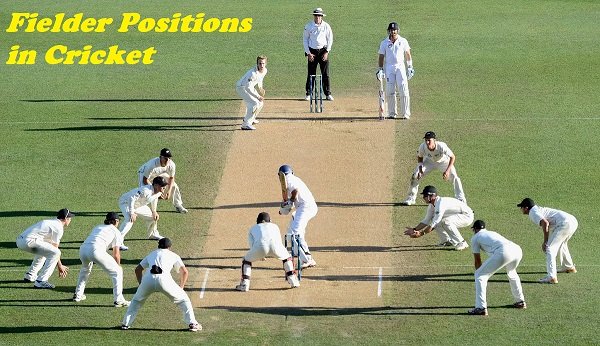
Close Catching Positions
These are positions wherein fielders stand very close to the batsman to catch edges or protective pictures.
1. Slip
Slip fielders stand at the back of the batsman on the off facet to catch balls that area off the bat.
Types of slips:
- 1st slip
- 2d slip
- third slip
Best in: Test cricket
Role: Catch edges off speedy bowlers and swing bowlers.
2. Gully
Located next to the slips but barely wider.
Role: To capture or stop balls cut via the batsman in the direction of factor.
3. Silly Point
Very near the batsman on the off aspect.
Role: To take quick catches off spinners.
4. Short Leg
Close to the batsman on the leg side.
Role: Catch balls popping off the bat or pad.
5. Leg Slip
Same as slip but at the leg side.
Infield (Inner Circle) Positions
These fielders are placed to prevent singles and create run-out possibilities.
6. Point
A key role on the off side.
Role: Stop cuts and backfoot photographs.
7. Cover
Between factor and mid-off.
Role: Stop drives.
8. Extra Cover
A bit wider than ordinary cowl.
Role: Support cover and prevent sturdy drives.
9. Mid-off
One of the maximum crucial positions.
Role: Stop straight drives at the off side.
10. Mid-on
Similar to mid-off however on the leg side.
11. Midwicket
Fielders here stop shots hit with the move-bat.
12. Square Leg
Square leg controls pictures that come at once from the batsman sideways.
13. Short Midwicket
Close to the pitch; used for catching.
14. Short Square Leg
Close to the batsman on the leg facet.
Outfield Positions
These positions are for boundary safety.
15. Long Off
Protects deep straight drives.
16. Long On
Deep fielding on the leg facet close to the boundary.
17. Deep Midwicket
Useful in T20 cricket.
18. Deep Square Leg
Stops powerful pull photographs.
19. Fine Leg
Stands at the back of the batsman on the leg facet.
20. Long Leg
Deeper version of satisfactory leg.
21. Third Man
Fielding behind the wicket on off facet.
22. Deep Point
Further from factor near the boundary.
23. Sweeper Cover
Common in white-ball cricket.
Read More: Canada vs USA Cricket – Complete Rivalry Guide, Head-to-Head & Key Matches
Table: All Fielding Positions in Cricket
| Position Name | Area of Field | Distance From Batsman | Role |
|---|---|---|---|
| Slip | Off Side | Close | Catches off edges |
| Gully | Off Side | Close | Cut shot catches |
| Point | Off Side | Medium | Stop square shots |
| Cover | Off Side | Medium | Stop drives |
| Extra Cover | Off Side | Medium | Block powerful drives |
| Mid-off | Off Side | Medium | Protect straight shots |
| Long Off | Off Side | Far | Boundary saving |
| Third Man | Off Side | Far | Stop edges behind wicket |
| Silly Point | Off Side | Very Close | Catch close shots |
| Mid-on | Leg Side | Medium | Straight leg-side shots |
| Midwicket | Leg Side | Medium | Infield leg shots |
| Square Leg | Leg Side | Medium | Pull and flick shots |
| Fine Leg | Leg Side | Far | Edges on leg side |
| Long Leg | Leg Side | Far | Deep leg-side boundary |
| Deep Midwicket | Leg Side | Far | Big shots catching |
| Short Leg | Leg Side | Very Close | Close catchings |
Fielding Positions for Fast Bowlers
Fast bowlers commonly use:
- Slips
- Gully
- Point
- Mid-off
- Mid-on
- Fine leg
- Third man
Why?
Because fast bowlers create edges while the batsman attempts to protect or assault. Slips and gully take catches, while 0.33 man and high-quality leg forestall runs.
Fielding Positions for Spin Bowlers
Spin bowlers use:
- Silly point
- Short leg
- Slip
- Midwicket
- Cover
- Deep midwicket (in restrained overs)
- Long off / long on
Why?
Because spin bowlers get batsmen to play slower pictures, which increases near catching chances.
Field Settings for Different Formats
Test Cricket Field Setting
Includes extra near catchers:
- three Slips
- Gully
- Silly Point
- Short Leg
ODI Field Setting
Focus on saving singles and limitations:
- Sweeper cover
- Long on
- Long off
- Deep midwicket
T20 Field Setting
More boundary riders:
- Deep midwicket
- Deep square leg
- Deep factor
- Long on & long off
Understanding Off Side Field Positions
The off side carries:
- Slip
- Gully
- Point
- Cover
- Extra Cover
- Mid-off
- Third Man
- Deep Point
- Sweeper Cover
Role:
Mostly used to stop shots performed with the bat’s face, like drives and cuts.
Understanding Leg Side Field Positions
The leg side incorporates:
- Mid-on
- Midwicket
- Square Leg
- Fine Leg
- Long Leg
- Deep Midwicket
Role:
Leg facet fielders forestall flicks, pulls, hooks, and sweep shots.
Diagrams of Fielding Positions (Text-Based)
Below is a simplified diagram to recognize the sphere Wicketkeeper
How Many Fielders Are Allowed within the Outfield?
In white-ball cricket:
- During powerplay: only 2 fielders allowed outside 30-yard circle
- Middle overs: 4 fielders out of doors
- Death overs: 5 allowed
Tips to Remember All Fielding Positions Easily
Off Side = Shots from bat face
Covers, slips, factor, and so forth.
Leg Side = Cross bat pictures
Midwicket, rectangular leg, nice leg.
Deep = Near boundary
Deep factor, deep cowl, deep midwicket.
Short / Silly = Very close
Short leg, silly point.
How Captains Choose Field Placements
Captains reflect onconsideration on:
- Bowler’s velocity and style
- Pitch swing or spin
- Batsman’s weaknesses
- Match state of affairs
- Required run charge
Example:
If batsman is strong in cowl drives, the captain pushes more cowl deeper.
Important Rules About Fielding
- Wicketkeeper need to wear gloves
- Only one fielder can be in the back of the striker besides keeper (in Tests)
- No fielder can live in included area for the duration of bowler’s run-up
- In T20s, best five fielders on leg facet allowed
Special Fielding Positions in T20 Cricket
T20 cricket has created some new positions:
Fly Slip
Behind the batsman however wider.
Short Third Man
Stops reverse sweep.
Deep Backward Square
For large slog photographs.
Best Fielding Positions for Beginners
If you’re new, start here:
- Point
- Mid-off
- Mid-on
- Square Leg
- Long On / Long Off
These positions assist you learn how to trap, forestall, and throw.
Frequently Asked Questions (FAQ)
1. How many fielding positions are there in cricket?
More than 30, inclusive of deep and short positions.
2. What is the maximum critical fielding position?
Slip in Tests, Long Off/Long On in limited overs.
3. Which role receives maximum catches?
Slip, wicketkeeper, deep midwicket, deep square leg.
4. What is a sweeper cover?
A deep fielder who stops barriers at the off aspect.
5. What is the difference between first-class leg and lengthy leg?
Fine leg is closer; long leg is deeper near the boundary.
Conclusion
Fielder positions in cricket are the coronary heart of fielding method. Every role has a completely unique cause and role in controlling the go with the flow of runs and developing wicket opportunities. Whether you are a beginner, educate, or fan, knowledge these positions gives you a deeper knowledge of the game.
This complete guide explained all fielding positions with simple English, tables, diagrams, and examples. With this expertise, you may now recognize cricket fits greater simply and analyze discipline settings like a professional.