






Bowling Methods in Cricket
Bowling methods shape the backbone of cricket, shaping the outcome of fits across formats which include Test cricket, One Day Internationals (ODIs), and T20 games. While batting frequently captures the highlight, bowling is the art that checks skill, patience, strategy, and physical endurance. A first rate bowling attack can dismantle even the strongest batting line-up, making bowling strategies an vital difficulty for gamers, coaches, analysts, and cricket lovers.
In this special manual, we are able to explore all bowling strategies in cricket, which includes their kinds, techniques, versions, policies, and tactical utilization. Whether you’re a newbie looking to recognize the basics or an advanced player seeking to refine your capabilities, this newsletter will provide you with whole clarity at the problem.
What Are Bowling Methods in Cricket?
Bowling techniques seek advice from the special techniques and styles utilized by bowlers to deliver the ball to the batter with the goal of taking wickets, limiting runs, or creating stress. These strategies range based on velocity, grip, wrist position, arm rotation, run-up, and body mechanics.
In cricket, bowlers are broadly classified into:
- Fast Bowlers
- Medium Pace Bowlers
- Spin Bowlers
Each category consists of several sub-methods and versions, which can be used relying on pitch situations, fit layout, and game state of affairs.
Importance of Bowling Methods in Cricket
Bowling techniques play a vital function in figuring out the success of a team. A properly-accomplished bowling method can dominate a healthy even on batting-friendly pitches.
Key reasons why bowling strategies are vital:
- They assist in taking wickets continually
- They manipulate the run fee
- They take advantage of pitch and weather conditions
- They create mental pressure on batters
- They decide fit momentum in all formats
Modern cricket has developed rapidly, making bowling strategies more advanced and tactical than ever earlier than.
Main Types of Bowling Methods in Cricket
The bowling strategies in cricket can be broadly divided into 3 important classes. Each category has unique traits and needs unique abilties.
Overview Table of Bowling Methods
| Bowling Category | Speed Range | Key Skills Required | Common Usage |
|---|---|---|---|
| Fast Bowling | 130–150+ km/h | Strength, accuracy, swing | New ball, early overs |
| Medium Pace Bowling | 110–130 km/h | Control, seam movement | Middle overs |
| Spin Bowling | 70–100 km/h | Grip, turn, deception | Middle & death overs |
Fast Bowling Methods in Cricket
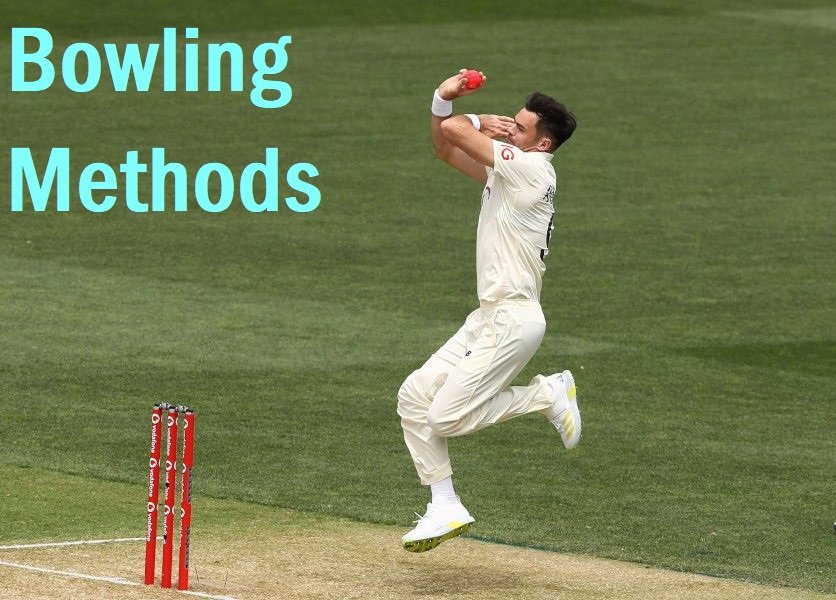
Fast bowling is one of the maximum competitive bowling techniques in cricket. It is based on velocity, soar, and motion thru the air or off the pitch to trouble batters.
Characteristics of Fast Bowling
- High run-up
- Strong shoulder and arm rotation
- Seam-up shipping
- Ability to generate bounce and swing
Fast bowlers are regularly strike bowlers who goal to take early wickets.
Types of Fast Bowling Methods
Fast bowling itself includes several specialized techniques and deliveries.
1. Swing Bowling
Swing bowling is a way in which the ball moves thru the air before pitching. This motion makes it difficult for batters to judge the line.
Types of Swing Bowling:
- Inswing: Ball movements into the batter
- Outswing: Ball moves away from the batter
- Late Swing: Swing takes place just earlier than reaching the batter
Swing bowling is handiest with a new ball below humid or cloudy conditions.
2. Seam Bowling
Seam bowling focuses on the use of the seam of the cricket ball to create lateral motion off the pitch after bouncing.
Key Features:
- Upright seam position
- Consistent length
- Exploitation of pitch cracks or grass
Seam bowling is mainly effective in Test cricket and on inexperienced pitches.
3. Reverse Swing Bowling
Reverse swing is a sophisticated speedy bowling approach used with an older ball.
Key Requirements:
- One aspect of the ball stored tough
- High bowling speed (generally above a hundred and forty km/h)
- Precise wrist function
Reverse swing can be lethal in dry situations and is frequently used for the duration of the later ranges of an innings.
4. Bouncer
The bouncer is a brief-pitched shipping geared toward the batter’s top body or head.
Purpose of a Bouncer:
- Intimidate the batter
- Force mistakes
- Push the batter onto the returned foot
There are guidelines governing the range of bouncers allowed in line with over, mainly in restricted-overs cricket.
5. Yorker
The yorker is a quick, full-period delivery that pitches at or close to the batter’s feet.
Advantages of Yorkers:
- Difficult to hit
- Effective in dying overs
- High wicket-taking ability
Yorkers are broadly utilized in T20 and ODI cricket.
Medium Pace Bowling Methods
Medium pace bowling bridges the space among speedy bowling and spin bowling. These bowlers rely extra on accuracy and variation than uncooked velocity.
Characteristics of Medium Pace Bowling
- Controlled run-up
- Consistent line and period
- Use of cutters and slower balls
Medium pacers are often good value and play a key role in controlling the middle overs.
Common Medium Pace Variations
| Variation | Description | Match Usage |
|---|---|---|
| Off-Cutter | Ball deviates off the pitch | Dry surfaces |
| Leg-Cutter | Ball moves away from batter | Middle overs |
| Slower Ball | Reduced pace delivery | Death overs |
| Back-of-the-Hand | Deceptive slower delivery | T20 cricket |
Spin Bowling Methods in Cricket
Spin bowling is a incredibly ability-primarily based bowling method that relies on flip, flight, flow, and deception in place of velocity.
Spin bowlers are specifically powerful on dry pitches and in longer formats.
Types of Spin Bowling Methods
Spin bowling is in particular divided into off-spin and leg-spin, with several versions beneath every category.
Off-Spin Bowling Methods
Off-spin is added using the palms, with the ball spinning from off to leg for a proper-handed batter.
Key Off-Spin Deliveries
- Stock Off-Break
- The primary off-spin delivery that will become the batter.
- Doosra
- Spins far from the batter, contrary to the off-smash.
- Carrom Ball
- Flicked the usage of palms, hard to study.
- Arm Ball
- Delivered without spin, regularly skids immediately on.
Leg-Spin Bowling Methods
Leg-spin is introduced the usage of the wrist and is taken into consideration one of the maximum hard bowling strategies to grasp.
Key Leg-Spin Deliveries
- Leg-Break
- Turns from leg to off for a proper-surpassed batter.
- Googly
- Deceptive delivery that spins contrary to the leg-wreck.
- Flipper
- Skids low and fast after pitching.
- Top-Spinner
- Bounces higher than predicted.
Comparison Table: Off-Spin vs Leg-Spin Bowling
| Aspect | Off-Spin | Leg-Spin |
|---|---|---|
| Spin Type | Finger spin | Wrist spin |
| Difficulty | Moderate | High |
| Turn Amount | Less | More |
| Variations | Fewer | Many |
| Risk Factor | Low | High |
Bowling Methods According to Cricket Formats
Different codecs call for exclusive bowling techniques and methods.
Test Cricket Bowling Methods
- Emphasis on swing and seam
- Long spells
- Patience and consistency
- Spin bowling for control and wickets
ODI Bowling Methods
- Balance among assault and economic system
- Use of variations
- Field-primarily based techniques
T20 Bowling Methods
- Yorkers and slower balls
- Wide yorkers
- Change of tempo
- Defensive discipline placements
Rules Related to Bowling Methods
Understanding the regulations is crucial to studying bowling.
Important Bowling Rules
- No-ball if the front foot crosses the road
- Limited bouncers consistent with over
- Illegal action if elbow extension exceeds limits
- Overarm shipping is mandatory
Failure to observe these rules can bring about penalties and suspensions.
How to Improve Bowling Methods
Improving bowling calls for subject, health, and continuous practice.
Tips for Better Bowling
- Focus on line and length
- Practice versions regularly
- Improve physical fitness
- Analyze batters’ weaknesses
- Learn suit conditions
Common Mistakes in Bowling Methods
Many bowlers struggle because of avoidable mistakes.
Common Errors
- Over-reliance on velocity
- Poor manage
- Predictable bowling
- Ignoring pitch conditions
- Lack of variation
Correcting those mistakes can appreciably decorate overall performance.
Role of Bowling Methods in Team Strategy
Bowling methods are crucial to group planning and fit approach.
- Setting attacking fields
- Bowling in partnerships
- Using bowlers in keeping with situations
- Breaking batting partnerships
Successful teams make investments heavily in developing numerous bowling assaults.
Future of Bowling Methods in Cricket
With technological improvements and records evaluation, bowling methods are becoming greater refined.
Emerging Trends
- Data-pushed bowling plans
- Hybrid bowlers (pace + spin)
- Advanced fitness regimes
- Skill-unique education
The evolution of bowling ensures that it stays a captivating element of cricket.
Conclusion
Bowling techniques in cricket constitute a perfect mixture of technology, talent, and approach. From raw pace to diffused spin, every bowling method serves a selected purpose and contributes to the game’s richness. Understanding these strategies no longer most effective enhances appreciation of cricket but additionally allows players improve their overall performance at every degree.
Whether it’s far a fiery speedy bowler delivering thunderbolts or a clever spinner weaving magic, bowling techniques will constantly continue to be the heart of cricket’s aggressive spirit.